
Step Back, Slow Down, See the Whole Field
10 Leadership Lessons While Coveting Marc Cucurella's Hair

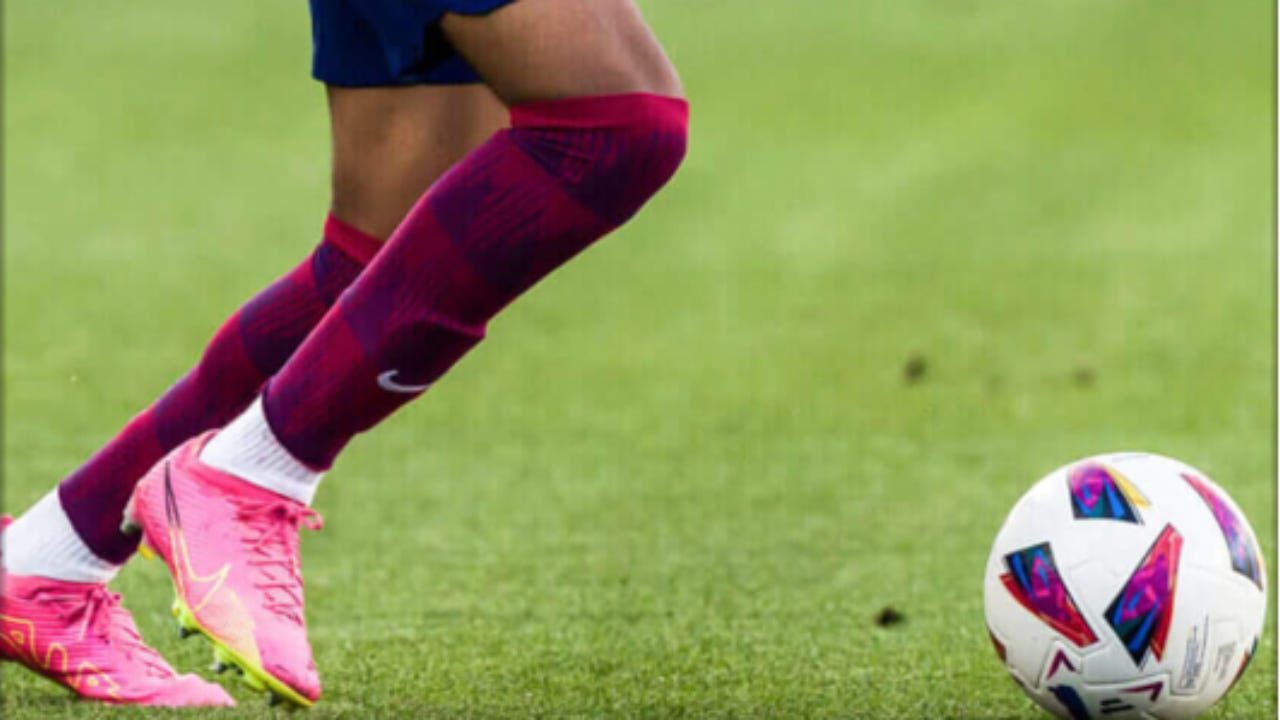
I spot leadership lessons in unusual places from the back of a horse to watching the Men’s World Cup. And the latter is a goldmine of leadership lessons. From the importance of stepping back to move forward, to the power of diversity and the need to celebrate milestones, soccer strategies translate surprisingly well to business success.
Whether you’re dribbling a ball or leading a team, these 10 insights will help you score big in your career.
This is undoubtedly an article of a different color!
I’ve been watching many of the games and while I’m from the U. S. and more or less agnostic about who wins, I do have a secret preference.
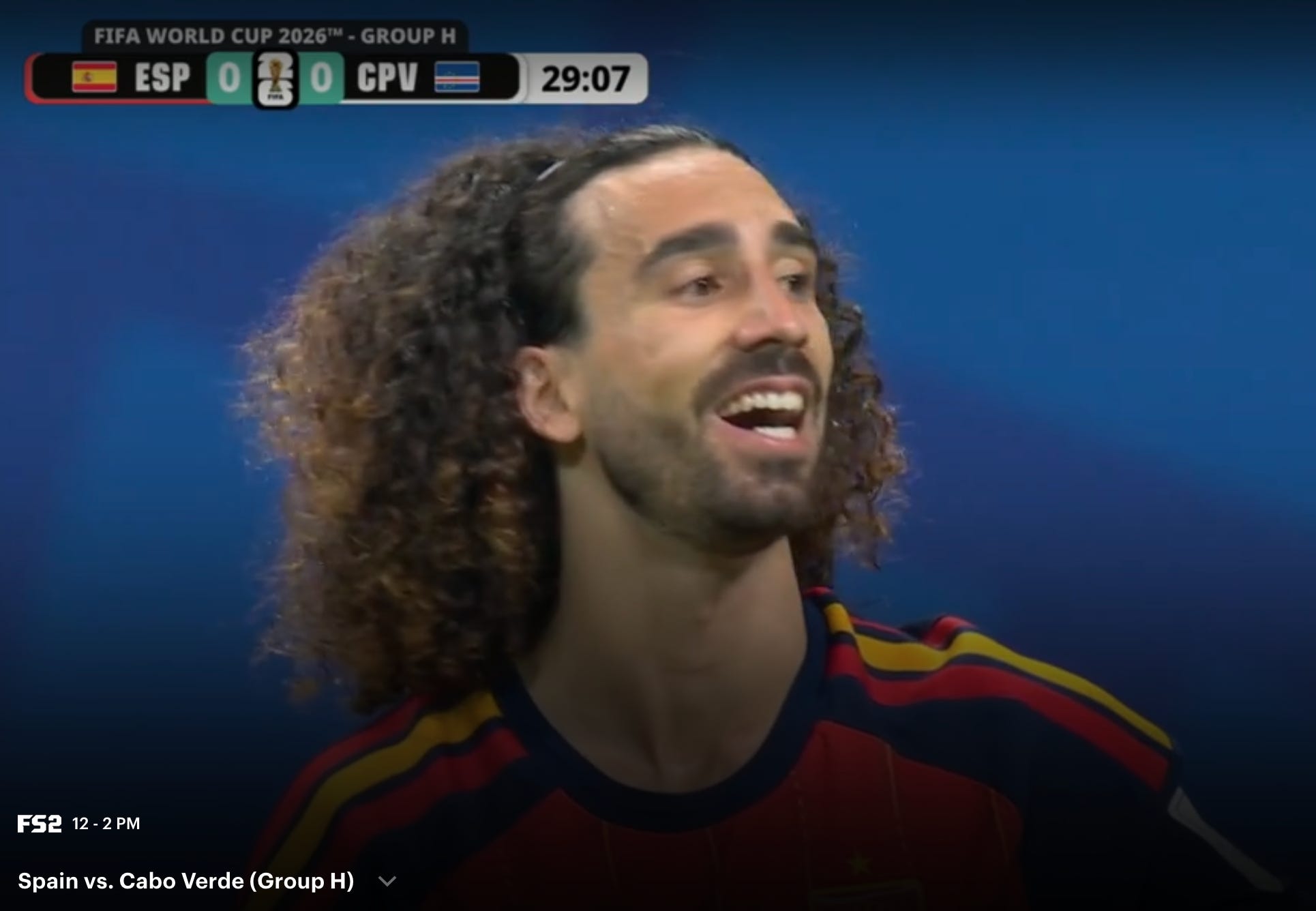
Marc Cucurella and the hair I covet.
It’s Spain - winners 4 years ago and still in it this year.
I have to admit to having a bit of a crush on their player Marc Cucurella. When he runs down the field with his mop of hair and his pink cleats it’s almost like he’s floating. And then there’s Ferran Torres. 🥰 Silly, I know.
Before we dive in, let’s give a round of applause for the first all-women referee team:
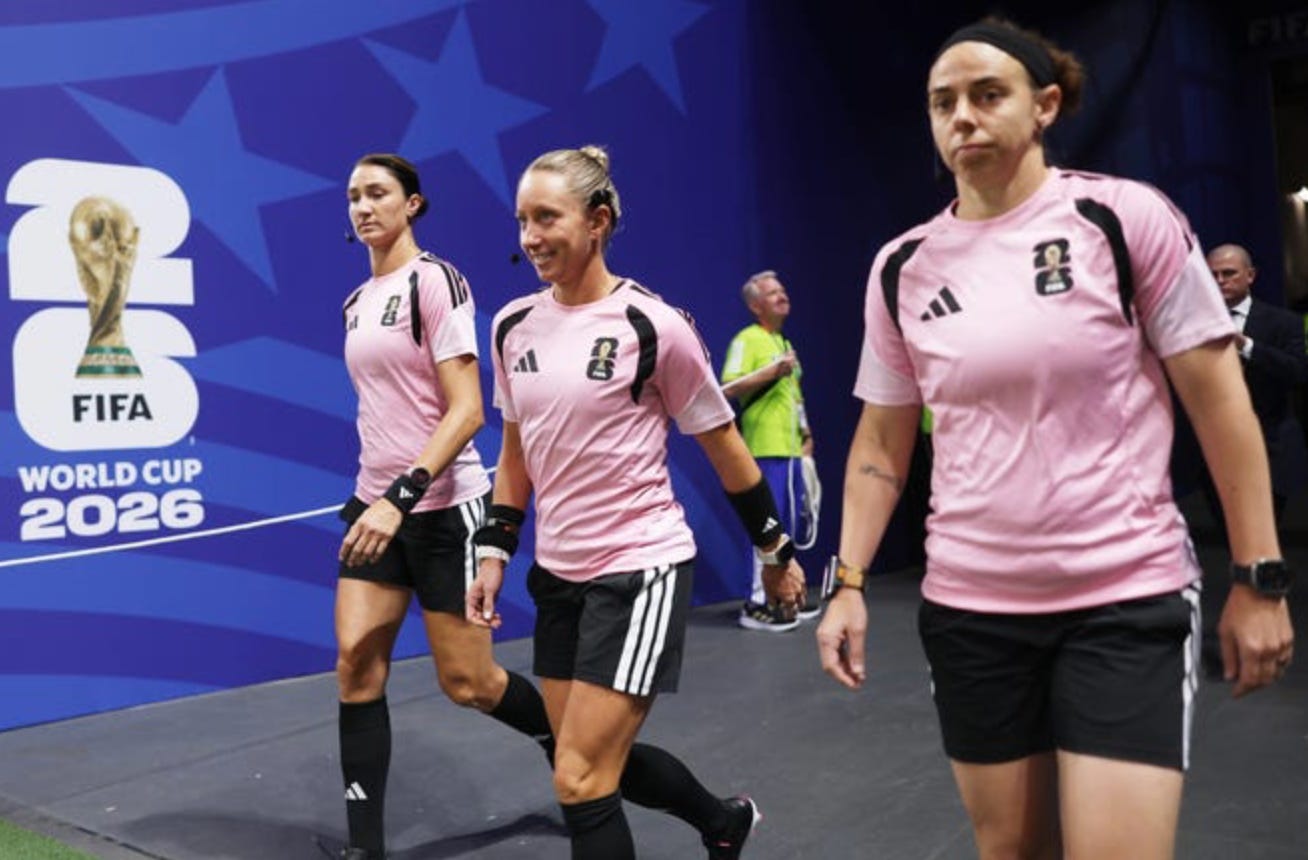
Referee Tori Penso along with assistant referees Brooke Mayo and Kathryn Nesbitt.
Down to business. Here are the leadership lessons have I noted.
10 Leadership Lessons from the Pitch
1. Sometimes you have to step back in order to go forward. There are many times when the offense passed the ball back to the defense as they were trying to create conditions to score. And the same is true for us. Sometimes we have to take a step back in our careers in order to go forward. I know many women who have done that.
It’s also true that sometimes we have to take a step back and rethink our position in the face of new evidence. In order to go forward with a recommendation that will stick. For example, before your next big recommendation, ask: what's the strongest argument against this - and have I actually tested it?"
2. Sometimes we have to go slow to go fast. There were many times in all of the games when, rather than keep an unrelenting offense going, the team would pause to set up a play. So the rhythm of the game changed from fast and frantic to slow and methodical. In business, this is a truth I learned early in my career in relation to implementing new technology.
When organizations were methodical in their planning, implementation (and I don’t mean just the switch over, I mean the switch over and the transition to effective use) of the technology, always went faster.
3. The best players see the whole picture and communicate with their teammates. There were many times when the camera enabled us to see that, even as they dribbled the ball downfield, players would lift their head, look around for open teammates and successfully pass the ball. Why? Either because the play was known in advance or because there was communication eye to eye, by hand, or sometimes verbally.
This is true for leaders at every level. Seeing the big picture, especially through business, financial and strategic acumen and communicating with teammates and direct reports about that big picture, is a success factor for you as that leader and for your organization.
4. Appreciation of diversity matters. Spain (and the other teams) have diversity of talent, heritage, age and style. They have their buttoned up players and their scruffy players.
If the field is diverse when we seek talent, our teams become diverse. My friend and colleague Sandra Veledar from I.Liv. tells a story about two managers who headed up similar teams. One was a woman, one was a man. Her team ended up being 50/50, women and men. His ended up being all men. Why?
Because women are more likely to recognize talent in other women. In most cases, we don’t look through mindsets based on stereotypes about women, men, careers and leadership.
5. Effort doesn’t count! Spain dominated against Cape Verde in the first half of its opening game. And yet the score didn’t reflect it at all. At the final whistle, the score was 0 - 0.
“No one cares the storms you encounter. They only care did you bring in the ship.”
Even if you work hard and bring all your expertise to bear, if you don't deliver outcomes, it won't matter in terms of how you're perceived. Don't lead with "here's what's in the way." or “here’s how hard I worked.” Lead with "here's what I got done."
6.Under promise and over deliver. Before they played Australia, the captain of the Turkish team announced “I think we will dominate the game, because we have more qualities and a more talented team. So we will see what happens.”
What happened? They did…dominate the match by almost every measure.
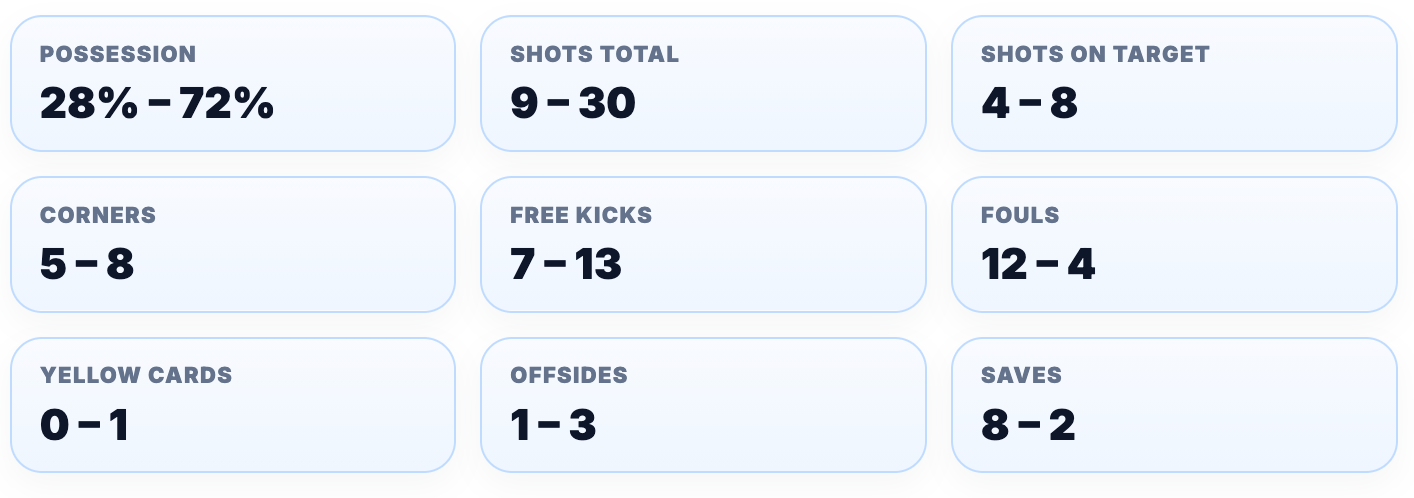
The second number is Turkiye’s.1
But, Australia won 2 - 0.
This is one of the oldest pieces of career advice for a reason. When you set expectations high before you’ve delivered anything, you’ve created a measuring stick that has nothing to do with your actual performance.
When you quietly set modest, achievable expectations, then exceed them, and you build something far more durable than a great pre-game quote: a reputation for reliability.
7. Celebrate milestones. For each team, every goal was an occasion for celebration. The joy and esprit de corps that they showed after each goal was uplifting.
So, as a colleague a manager or an executive, build milestone celebrations into the project roadmap - even as your team or your colleagues stay focused on the long term goal.
Think of one upcoming milestone on your team's roadmap and decide now how you'll celebrate when you hit it.
8.Your teammate could become your adversary. One of the strange realities of the World Cup is that club teammates suddenly find themselves on opposite sides in international play — players who know each other’s tendencies and strengths are now tasked with beating each other.
And yet it doesn’t get ugly. If anything, there’s an extra layer of respect, even warmth, in those matchups. Hard competition, no burned bridges.
This is the dynamic in our careers too, and one I think we, as women, sometimes navigate differently than our male colleagues. When a collaborative relationship suddenly turns competitive, it can feel personal in a way it doesn’t seem to for the men around us. We’re more likely to read it as a relationship rupture rather than simply the game changing.
But the players show us another way. The colleague we’re collaborating with today could be a competitor for a promotion tomorrow. The peer on our team could become our boss next year. But here’s an important point: a teammate who beats us fairly isn’t the same as a colleague who undermines us to win. One is the game. The other is harm - and no amount of “good sportsmanship” obligates us to stay gracious about that.
How we show up now - generously, fairly, with integrity - is what determines how the relationship will hold up when the dynamics shift.
The players who go all-out against a former teammate and still embrace them at midfield aren’t naive. They’re playing the long game. Today’s opponent was yesterday’s teammate, and likely will be again.
Is there someone you’re fairly competing with right now — a promotion cycle, a reorg — where the dynamic could shift? What are you doing today to make sure that relationship survives it?
9. Sometimes you have to get out of your lane. If I turned my head away and then returned to a match, I would often be surprised that someone from defense was far up field on offense, or someone on the left had sprinted to the right. The same is true for us.
Sometimes to be effective, we have to get out of our lane. Saying, “That’s not my job” will hold you back. Hearing, “That’s not your job” will hold the organization back.
This is especially true when it comes to creating coalitions for change or pointing out issues and potential solutions.
Where could you take action this week to raise an issue that needs to be addressed?
And finally, the last lesson is kind of silly and I think you’ll appreciate it.
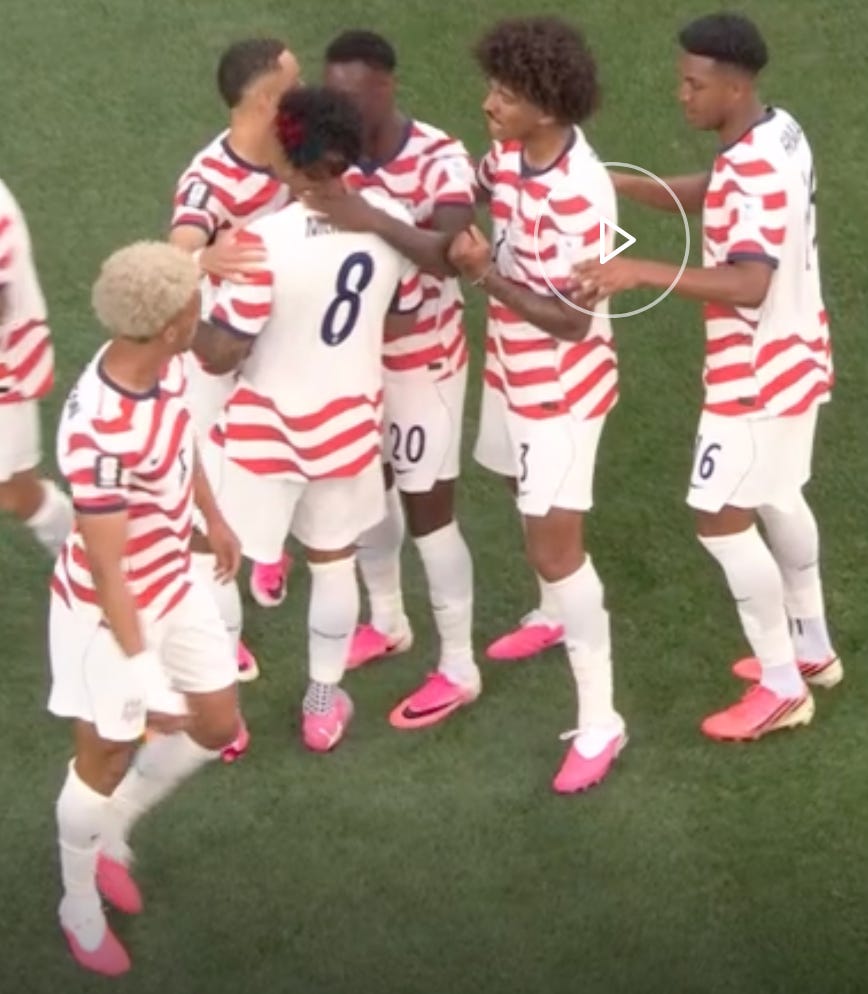
10.Real men do wear pink. Back to Marc Cucurella. During UEFA Euro 2024, he was one of few players wearing pink cleats. This year the pitch is awash in pink.Reuters calculated that 365 of 528 starters wore pink cleats. And in Miami on 15 June the on-field officials wore pink. They were all men.
The origin behind pink cleats is a little murky.
Some people say it was originally in honor of the Breast Cancer Month. Some people write that it’s an anti- homophobic statement. This being Pride Month, I’m inclined to like that explanation.
In the final analysis, the reason doesn’t really matter. It’s a delightful break from gender norms. Now it’s a “thing.”
And I am reminded that, like Marc in 2024, the women who paved the way for us - the pioneers - displayed courage, values and foresight.
All aspects of personal greatness - the foundation upon which we stand as leaders.
Comments are open. Please let us all know which tip(s) spoke to you.
GOOOOOOOOOOOOOOOOAL!
Susan
PS - a little personal history. I went to high school with no US football team, but champion football/soccer teams. I’ve been a fan for a very long time!

You’re following all the advice and it still feels like something’s in the way.
You are not the problem. You are working inside a system that’s withholding something from you.
I’m here to offer what that system can’t or won’t: the business, financial and strategic acumen that opens doors - through every article, the Be Business Savvy Course and Your Business Savvy Coach.
❤️ Like, share or restack this post — it’s the best way to help other women find it
📘 Explore the Be Business Savvy Course
https://www.myfootballfacts.com/world-football/fifa/world-cup/australia-2-0-turkiye-post-match-review-full-time-report-and-key-moments/