
The Day My Peer Became My Boss
What I wish I had known about strategy - and why my life's work is to teach it

Business savvy doesn't just help you advance. It changes how you understand everything that already happened.
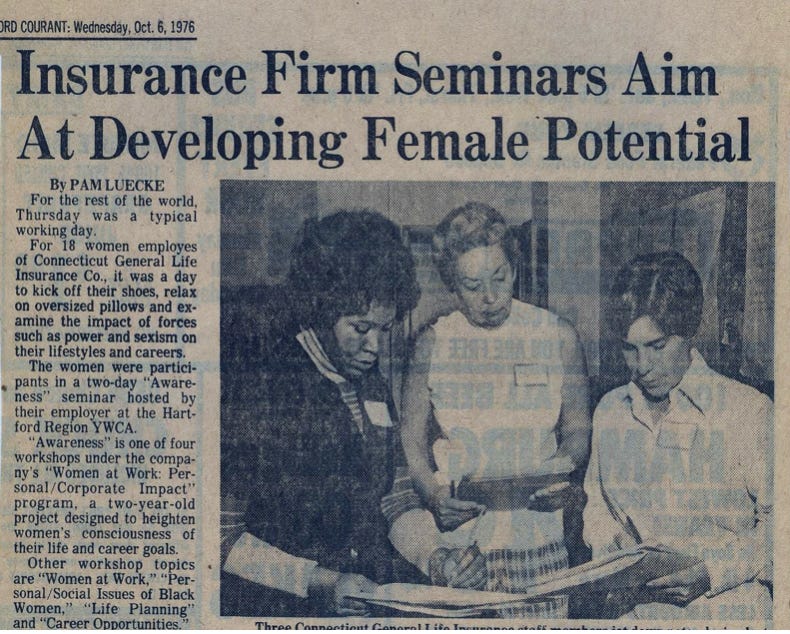
Before I knew what I didn’t know.
It was an unremarkable day. I was at my desk, surrounded by colleagues - one man and the rest women (2 of them above) - doing the work our department had been built to do. We ran what would now be called DEI programs: three-day residential experiences on the dynamics of race and gender. It was meaningful, pioneering work. On most days, it felt that way.
My manager Bill called me into his office. This happened often. I walked in without a second thought.
And then the floor dropped.
Bill told me that based on a proposal from my colleague Jack, the department was being reorganized. Jack would now be my manager.
I stood there trying to make sense of the message. Jack and I were peers. We collaborated closely. We were equals - or so I had believed. And in the time it took Bill to deliver one sentence, that had changed.
I walked out with one thought loud above everything else:
How dare he do that to me‽ It’s because I am a woman.
Here’s the thing, I didn’t have an explanation that made sense, so I reached for the most obvious one available. That explanation rested in my identity - it happened because I’m a woman. It felt true because it was unverifiable.
It felt true because it was unverifiable.
The years that followed
The feelings of betrayal and being discriminated against lingered.
When I thought about what happened, I wondered: Were the men playing politics? Had I done something wrong? Was there something I missed or something I was lacking? Was it because I was a woman (after all, the one man in the room reorganized a department of women delivering gender dynamics training)? That last question had a particular sting, one I couldn’t quite discount.
The friction with Jack was real and lasting. Our working relationship, once easy and collaborative, became something careful and complicated.
Later we both left the company and forged successful careers, but he was a part of my network that I let go.
The moment it finally clicked
Decades later, I was beginning the work that would become Be Business Savvy. I had just discovered what I now call the Missing 33% of the career success equation - the business, financial and strategic acumen that leadership development consistently under-teaches and that women consistently under-develop as a result.
I knew the discovery was simply awareness unless I could find ways to turn it into action by creating a Business Savvy program that was tightly designed, accessible, easy to put into practice. And I wanted to share examples from my own experience: moments where I wished I had known then what I was learning now.
I remembered the reorganization.
For the first time, I looked at it not through the lens of what had been done to me, but through a business savvy lens.
What I saw stopped me.
While I had been working “eyes down” focused on doing a good job, Jack was working “eyes up.” He read the external environment. Forces outside our organization were calling for changes inside creating organizational needs that our department wasn’t structured to meet. And he brought that analysis - his reorganization proposal and strategic case - to Bill.
He didn’t reorganize me out of malice. He reorganized the department because he understood something about the business that I hadn’t known to look for. He had what I was coming to recognize as strategic acumen. If I had more of that years ago, I could have made the pitch to Bill. I didn’t, so I couldn’t.
How dare he do that to me‽
Became:
I wish I had known then what I know now about strategy.
What business savvy actually does
Most of us think of business savvy as something that helps us advance. And it does.
But it also does something quieter and just as powerful: it reframes the past and activates us in the present.
It reframes the past because when we can see the business logic behind decisions that once felt like attacks, we stop carrying weight that was never ours to carry.
It activates the present because once we can read the external environment, understand the financial targets, and see the gaps in internal capabilities - we become the one who brings that analysis to the table. We’re the one who sees what’s needed. Who pitches the reorg. Who shapes the strategy instead of being shaped by it.
That doesn’t mean every reorg is justified. It doesn’t mean gender dynamics weren’t also at play. It means we gain the ability to read situations more accurately - and to act on what we see.
Jack had business savvy. I didn’t. Not yet.
Now I do. And so can you.

If you’re looking for content that directly addresses the business, financial and strategic acumen you want more of - the kind of development that complements the personal character and engagement skills you’re likely known for - the Be Business Savvy Course is built for exactly this purpose. Self-paced, with coaching support, designed to be accessible even if you didn’t come up through operations, finance or strategy.
I welcome your next step:
❤️ Like, share or restack this post - it’s the best way to help other women find it
📘 Explore the Be Business Savvy Course
Lead ON!
Susan