

LinkedIn is where your professional reputation is built or business is grown. The algorithm is cutting your visibility. The workarounds are cutting your time. Decide if any of these workarounds serve you and let go of the rest.
Last night, Erika Jefferson described doing something quietly radical. She’s blocking LinkedIn’s “suggested posts.” Not complaining. Not writing a takedown. Just, methodically, blocking them — one at a time.

I read that and thought: of course she is. Because by then I’d already heard from a dozen other women, all describing some version of the same thing. Different actions, same exhaustion.
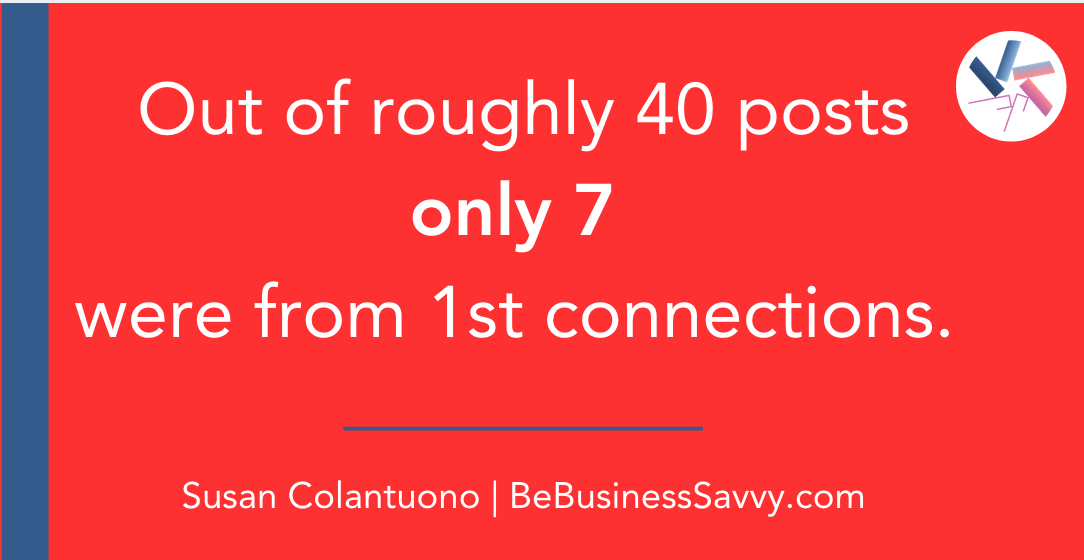
The night before, I’d run an informal experiment on my own feed: out of roughly 40 posts, only 7 came from my actual 1st-degree connections. Suggested posts, ads, and content from 2nd/3rd-degree connections made up the rest — and once I started paying attention, I noticed that men dominated all three categories.
I posted about it and the comments poured in. I expected the outrage. I was struck dumb by the workarounds.
Here’s the effort we already invest just to see what we asked for - content from connections we approved:
Leaving the platform entirely and giving up the chance that visibility might work in our favor
Reading only messages and notifications, skipping the feed altogether
Actively searching out the people whose content we want to see
Blocking suggested posts one by one
Curating connections “brick by brick” to filter out unwanted content
Building @ lists. Lists of connections interested in our content so our own network actually sees it
And if you’re thinking “I’ll just put the link in the first comment” — LinkedIn penalized that workaround too, as of early 2026. Posts with external links see roughly 60% less reach. Even our workarounds have workarounds.1
Then there are the workarounds that cut deeper.
Muriel Demarcus is considering changing her LinkedIn gender to male. This one doesn’t cost time. But it likely costs something else entirely.
Mine? I’m putting my Substack QR code directly in my images. The algorithm can’t penalize what it can’t see.
Alexandra Kärgel limits herself to five posts maximum — a self-imposed ceiling designed to game what the algorithm will and won’t suppress. A woman rationing her own voice to stay visible. Let that land.
Gry Stene summed it up: “Double the work... everywhere.” Muriel Demarcus called it “doomed if we do, doomed if we don’t.” That’s where the name came from: the Women’s LinkedIn Algorithm Work-Around Tax.
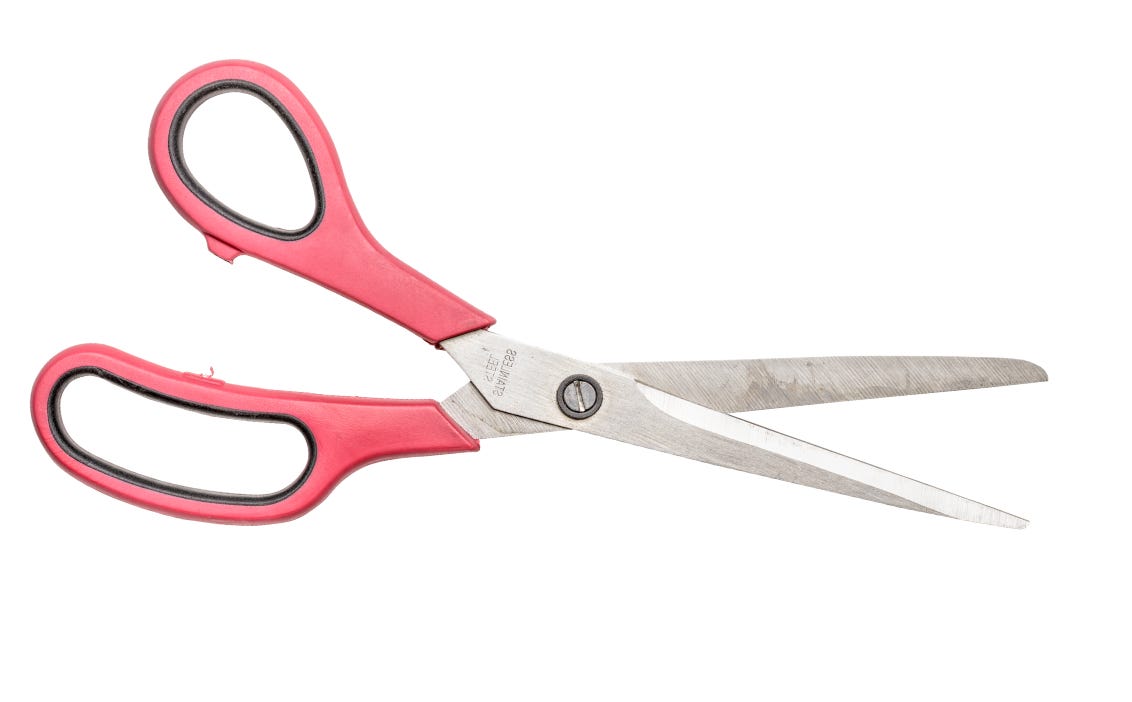
Here’s the scissors effect that we have to face:
The algorithm cuts our visibility. The workaround cuts our time. We’re caught in a double bind.
And the tax we have to pay:
The workaround tax is regressive. It falls hardest on those of us who flat-out can’t absorb it. We statistically have less “free” time - and every item on that list asks us to invest more of it in LinkedIn. Not in our work. Not in ourselves. Not with our friends and family.
And here’s what makes it more than a LinkedIn problem. Women have always built unofficial infrastructure when official systems failed them. Informal networks when formal ones were closed. Workarounds when the front door wouldn’t open. The list above isn’t new behavior — it’s the same pattern that shows up everywhere, now applied to an algorithm. The platform changed. The tax didn’t.
Then this happened. A colleague affirmed my post with a DM saying:
“You tell ‘em.”
I wrote back without thinking about it:
“When it comes to telling LinkedIn — I know I’m shouting into the void. But at least I’m joining a chorus of others who are alerting women to what’s happening, and to the fact that we aren’t crazy.”
We aren’t crazy.
Dorothy Dalton ran her own tally the next morning and found the same shape.
Sarah M Worthy said she didn’t want more than 5% of her feed from strangers — and added that this was true especially when following women. Independently, across different networks, different feeds, different nights — the pattern kept showing up.
Not every woman sees the tax. Some have found explanations for it. They say: the industry skews male, the feed reflects your network, it's just how professional environments work. Those explanations aren't wrong. They're just incomplete."
A room of our own?
But one other comment echoed what I (and possibly you) often wonder. Shala Druin wrote:
“Maybe we need a women’s-only professional platform where we can network in a safe space.”
I completely get her impulse. But here’s what that solves and what it doesn’t: It would give us a room of our own. It wouldn’t give us their room - the one where the decisions about hiring, funding, and promotion are still being made, by people who’d have no reason to follow us there. The tax doesn’t disappear if we leave. It gets paid another way by women who never get seen by the people who could actually change something.
So instead, a lot of us are doing the unglamorous thing: paying the tax and making it visible while we do.
One last irony worth naming: the algorithm seduced me into spending hours on LinkedIn documenting how much I hate it. The platform counted every minute as engagement. It doesn’t care that I’m furious. Engagement is engagement.
Even our outrage is working for them.
The algorithm made my case as I wrote this series
I didn’t have to look far for evidence. My own LinkedIn analytics from the past two weeks told the story.
The posts that performed best:
My informal experiment scrolling my own feed (2,787 impressions, 62 comments),
The Linkedin Algorithm Workaround Tax announcement (627 impressions, 17 comments),
A post about AI legal accountability (59 impressions).
These posts were rage-adjacent, topical and emotionally charged. In the case of the feed experiment, personal discovery framing was also a feature.
The posts that got throttled:
“You finished the project on budget. And then someone else got the promotion.” 58 impressions.
“She’s in the Room, Are You Asking the Right Question?” 34 impressions.
My Language of Power content - a framework that has been profoundly useful to many women - consistently in the single digits.
My most substantive career-powering content, the frameworks women find most powerful and the analysis that I’ve researched for years all rendered invisible.
And here’s the meta-irony that I find strange: the posts about LinkedIn suppressing women’s content were among my strongest performers on LinkedIn.
The algorithm throttled my expertise while amplifying my documentation of its throttling.
That’s not a content problem. That’s the scissors, open again. The blade that suppresses what you know. The blade that amplifies your outrage at being suppressed. Are you seeing the same?
What’s a Woman to Do?
Choose your workarounds deliberately, not exhaustively. You don’t have to do all of them — pick the ones that cost you least and deliver the most. And count the cost honestly: time, energy, reputation, reach. The tax is real whether you name it or not. Naming it is where we start.
#LinkedInvisibility #EndTheTax #FixTheAlgorithm
Lead ON!
Susan
Part One

You’re following all the advice and it still feels like something’s in the way.
You are not the problem. You are working inside a system that’s withholding something from you.
I’m here to offer what that system can’t or won’t: the business, financial and strategic acumen that opens doors - through every article, the Be Business Savvy Course and Your Business Savvy Coach.
❤️ Like, share or restack this post — it’s the best way to help other women find it
📘 Explore the Be Business Savvy Course
Susan
digitalapplied.com — “LinkedIn Algorithm 2026: Engagement Strategy Guide,” February 2026
dataslayer.ai — “LinkedIn Algorithm 2026: What’s Working Now,” April 2026
I have also noticed any posts related to algorithmic bias perform exceptionally well.
So do random posts unrelated to work - or simply related to something in the news (e.g. the social media ban).
What underperforms? - Anything related to negotiation — the work I actually do.