
Why Good Intentions Don’t Close the Gap, But This Does
We have the data. We have the motivation. What we still need is the strategy.


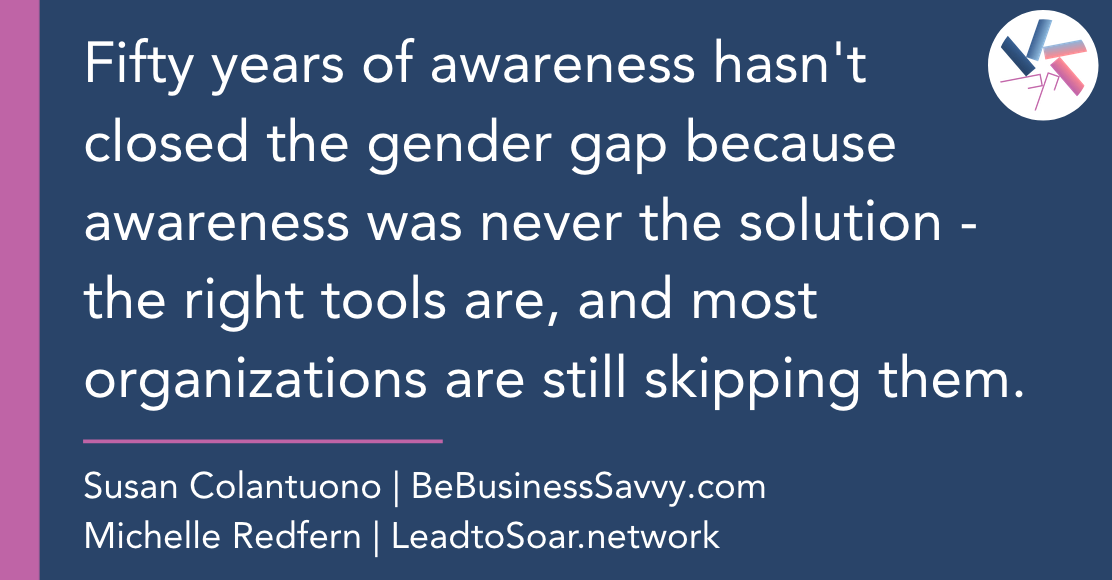
Fifty years of awareness hasn't closed the gender gap because awareness was never the solution - the right tools are, and most organizations are still skipping them.
Two LinkedIn posts. Two different women. The same nerve, struck.
Susan called out a pattern hiding in plain sight: companies announcing cuts to parental leave, PTO, and IVF benefits, all described as impacting “caregivers.” The post called it gender-scrubbing: using neutral language to conceal a policy’s gender-adverse impact and escape accountability for the harm caused.
Within 48 hours: 166,000+ impressions. 1,000+ reactions. 297 comments. Women responded with grief as much as anger.
Michelle identified something women have had to deal with their entire careers:
Things women get called when we refuse to make ourselves smaller so as to make others feel bigger: Difficult. Abrasive. Hard. Full on. Doesn’t suffer fools gladly. Things men get called for the same behaviour: Leader.
48,000 impressions. 123 comments. Same grief. Same anger.
Different posts. Different authors. The same thing happened: women recognized something they already knew but hadn’t seen overtly called out. This was not new information for them, it was recognition.
That’s worth your consideration. Because if the problem were simply a lack of awareness, calling it out once would be enough. It isn’t enough. We’ve had the research since the 1970s, and some of us were around for those early studies, watching the data accumulate decade by decade while the gap proved stubbornly resistant to closing.
Awareness has never been the bottleneck.
What the current data confirms, and what it still can’t do
The evidence of rollback is now substantial and difficult to ignore (unless you’re willfully ignoring it.) There is a measurable withdrawal of the structural conditions women need to advance.
A January 2026 survey of more than 400 women found that DEI rollbacks will:
Influence pay equity and salary transparency (89%)
Limit protections against bias and harassment (84%)
Reduce leadership opportunities (83%) and
63% of women have never had a formal mentor, with a widening access gap as corporate DEI commitments contract.
Women are not imagining this; the data confirms it.
Resistance isn’t contained to boardrooms. UN Women sounded the alarm in June 2025, warning that online communities collectively known as the manosphere, once confined to fringe forums, have migrated into schoolyards, workplaces, and personal relationships.
According to the Movember Foundation, a UN Women partner, nearly two-thirds of young men now regularly engage with masculinity influencers online, many of whom promote the idea that men are victims of feminism. Social media algorithms reward the most provocative versions of that message. The young men who are participants in it will become the colleagues, direct reports, and managers of the women reading this article.
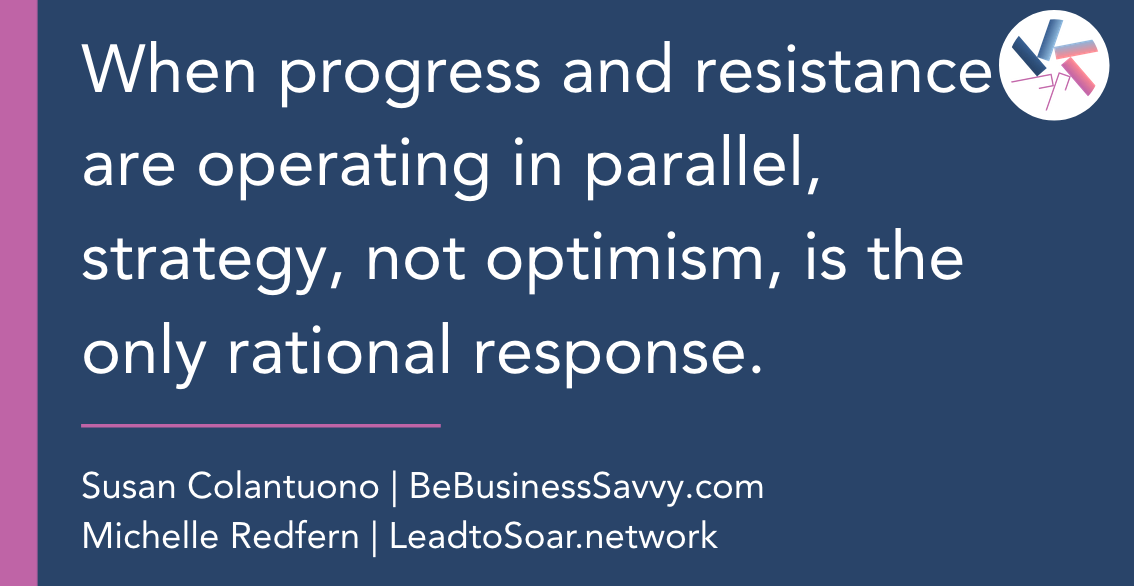
Women are simultaneously making historic economic gains. So we see that progress and resistance are operating in parallel. This is exactly the dynamic that makes strategy, not optimism, the only rational response.
A January 2026 World Economic Forum analysis states the problem clearly: organizations have been publishing reports, making commitments, and running awareness campaigns for years, and progress remains painfully slow. The problem has never been a lack of stated priority. It has been the absence of accountable leadership capable of turning principles into practice.
Enough with the awareness. We have it. What we don’t have yet, is the mechanism that converts awareness into action.
That missing mechanism isn’t more research
The response to rollback requires two things working at once, not in sequence.
Organizations need to stop skipping the hard work of fixing the systems that produce inequity. That’s the 4D Framework.
Women need the ability to navigate those systems while the fixes are still underway. That’s Business Savvy. The fluency to translate what is right into what gets resourced, measured, and held to account.
These aren’t competing priorities. They’re a both/and. And right now, most organisations are doing neither.
Organizational accountability requires: The 4D Framework
Organizations don’t fail at gender equity because they don’t care. They fail because they skip steps. They see a problem, feel bad about it, announce a program, and call that action. The program runs. The data barely moves. Leadership is baffled.
The 4D Framework exists because good intentions without discipline are just expensive noise.
Here is what most gender equity strategies skip: the first three steps.
Diagnose what is actually happening, not what leadership believes is happening.
Define who owns what outcome, by when, with what consequences if there is insufficient progress..
Design systems that produce equity rather than performative activations.
Deliver the sustained capability for the organisation to implement and measure.
The framework isn’t complicated. It just requires effort and accountability, which turns out to be the hardest thing to find in too many organisations.
And Business Savvy becomes the connective tissue.
Women who understand financial performance, develop a strong business case, and spot gender-scrubbing in language - elements that an organization cannot ignore - are the women capable of driving the 4D process even when leadership hesitates.
You can’t diagnose issues you can’t identify; you can’t define goals without measurable data; you can’t design solutions without a credible business case; and you can’t deliver solutions that leadership refuses to fund.
The frameworks address different audiences. The commitment is the same: move gender equity from the sentiment column to the strategy column, where decisions are actually made.
Not exhaustion. Strategy.
At the 2026 International Women’s Day commemoration at the UN, Executive Director Sima Bahous described the pushback against gender equality as:
“A pushback ever more virulent and adaptable, that seeks to undo our achievements and those of feminists before us”, and declared: “In its face, we do not back down. We redouble our efforts.”
Redoubling effort without the right tools will create exhaustion and double down on the harmful pattern of “just be resilient”. Let’s face it, determined women are already leading these changes, and they already have more than enough on their plates.!
We’ve had the awareness. We’ve done the studies. We’ve felt the grief and the anger, and that response is legitimate. But sentiment doesn’t protect a single woman’s career. Strategy does.
Business Savvy gives women the language to survive and advance in a system that is still being fixed. The 4D Framework is how you fix it. Neither is optional. Both are long overdue.
That’s what our collaboration is about.
Lead ON!
Michelle
In The Leadership Compass I lay out exactly what BQ is, why it’s the missing link in women’s leadership development, and what organisations need to do about it. Pick it up. And if your organisation is serious about the 4D work, talk to me. Good intentions have had fifty years to do their job. Learn more at my Truth Bomb Times here on Substack.
Lead ON!
Susan
If you’re looking for content that directly addresses the business, financial and strategic acumen you want more of - the kind of development that complements the character and engagement skills you’re likely known to have - the Be Business Savvy Course is built for exactly this purpose. Self-paced, with coaching support, designed to be accessible even if you didn’t come up through operations, finance or strategy.
 | A guest post by
|
This is a fantastic article and calls to action the truths that we already know. Thank you for continuing to bring this to light. I've also written a similar article:
https://pamluettich.substack.com/p/twice-penalized-the-cost-of-being?r=1kys93&utm_campaign=post-expanded-share&utm_medium=web