
The Patriarchy Didn't Disappear. It Sends You to a Spa.
The 1968 feminists had a Freedom Trash Can. We have a budgeting app. Both are tools of revolt.

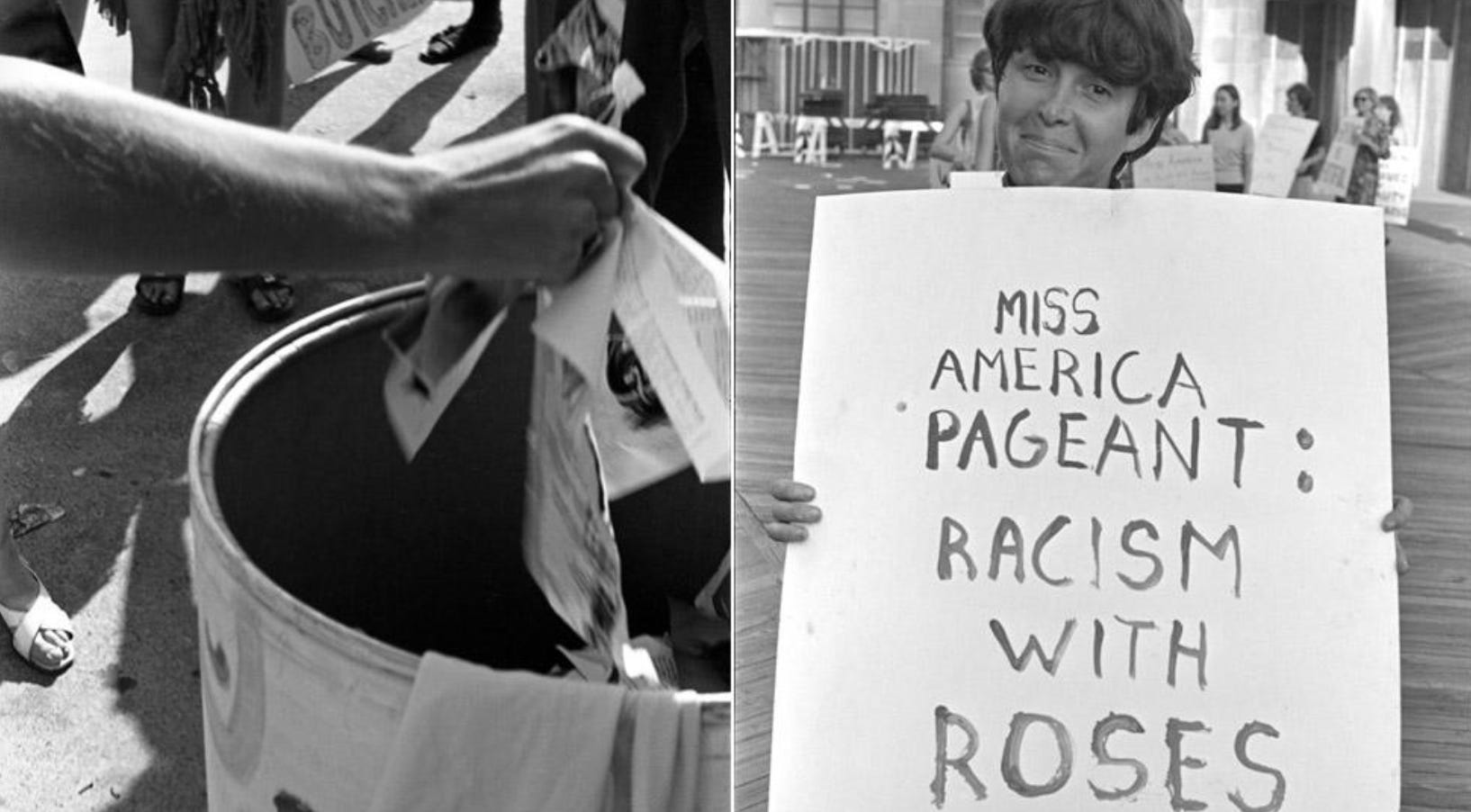
In 1968, to protest the Miss America Pageant, women threw “accouterments of…enforced femininity” into a Freedom Trash Can. These included: “mops, pots and pans, copies of Cosmopolitan and Playboy magazines, false eyelashes, high-heeled shoes, curlers, hairspray, makeup, girdles, corsets, and bras; items the protesters called ‘instruments of female torture.’”1
They weren’t actually burned - that’s the myth. But the gesture was real, and so was the message: we refuse to be contained by the physical standards that the patriarchy imposed on us in the name of femininity.
Fifty-seven years later, women are still being contained. The garments have changed. So has the enforcer.
What changed — and what didn’t
The 20th century feminist revolt was aimed at the domestic patriarchy: husbands, fathers, the nuclear family as a power structure. The girdle was a symbol of everything women were expected to squeeze themselves into - physically and personally - to be acceptable to the men in their lives.
The revolt worked. Imperfectly, incompletely, but it worked. Women entered the workforce in historic numbers. The domestic grip loosened.
And then something quietly happened.
Corporate culture stepped in.
The domestic patriarchy didn’t disappear. It got a rebrand. It moved from the home into the office, from the husband’s expectations into the employer’s. And it brought new enforcers: billion-dollar beauty, wellness, and cosmetic industries that discovered something the girdle manufacturers never had - if you tell women that the containment is actually empowerment, they’ll pay for it themselves.
The patriarchy doesn’t need husbands anymore. It monetized itself.
Meet the new boss
The 1968 protest targeted visible, nameable oppression. A pageant. A swimsuit. A beauty standard with a face (white) on it.
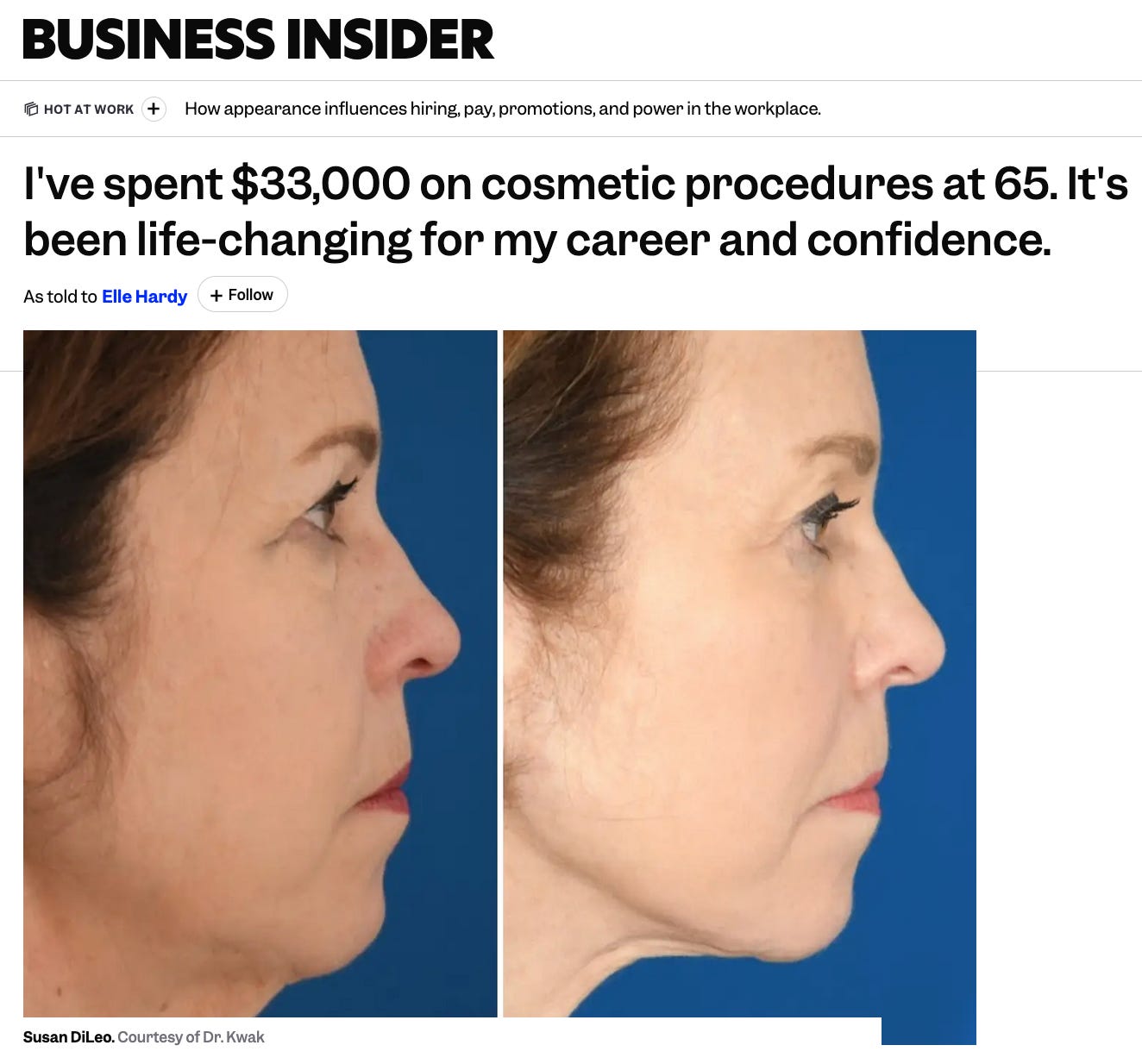
Today’s containment is more sophisticated. It arrives in your inbox as a Business Insider article celebrating $33,000 facelifts as career investments. It shows up in the weight room, rebranded as female ambition. It sits on the shelf of your local medical spa, priced just within reach, waiting to be called self-care.
It doesn’t have a face. It has a sponsored content strategy.
And here’s the evil genius of it: unlike the girdle, which you could throw in a trash can, the new containment is internalized. We police each other. We police ourselves. We scroll through “Hot at Work” articles nodding along, spending our unequal pay to meet a price of admission that keeps quietly rising.
The Freedom Trash Can worked because the enemy was external and visible.
Today’s enemy is inside the building.
The revolt looks different now
I’m not suggesting we throw our moisturizers into a bonfire (though I’d understand the impulse).
The 21st century version of this revolt is quieter, more personal, and ultimately more powerful — because it’s financial.
It looks like the woman who added up her $2,000 annual gel nail spend and decided: this money is mine.
It looks like refusing the Botox party team-building event — and not apologizing for it.
It looks like redirecting a $12,000 appearance budget into the business, financial, and strategic acumen that actually compounds — the development that builds real power rather than the appearance of acceptability.
It looks like naming the tax before you pay it. And we have an app that does just that.
The bra-burning generation revolted against the idea that their bodies existed to please men.
We’re revolting against the idea that our bodies - and our bank accounts - exist to meet a corporate standard of belonging and an industry eager to take our money.
Same fight. New battlefield. Higher stakes, because this time we’re being charged for the privilege.
The question for our generation
The women in Atlantic City in 1968 had clarity about what they were refusing and why.
Do we?
When we reach for the expensive moisturizer, the injectable or the gym membership marketed as leadership development, do we ask whether we’re making a free choice or paying a tax we’ve been conditioned to believe is inevitable?
Here’s the hardest truth: the system has made that question genuinely difficult to answer. When compliance is packaged as self-care, when containment is rebranded as confidence, when the tax looks exactly like pleasure — the line between choosing freely and being conditioned to choose quietly disappears. That’s not a flaw in the system. It’s the feature.
A trap you can’t see is the most effective trap of all.
The revolt begins with naming it anyway.
Not with a trash can. With a moment of honest accounting.
Is this mine — or is this theirs?
This is part 3 of my It Needs to Be Said series. Here’s the piece that started it

What would your version of the revolt look like? I’d love to hear it in the comments.
Lead ON!
Susan
If you’re looking for content that directly addresses the business, financial and strategic acumen you want more of - the kind of development that complements the character and engagement skills you’re likely known to have - the Be Business Savvy Course is built for exactly this purpose. Self-paced, with coaching support, designed to be accessible even if you didn’t come up through operations, finance or strategy.
https://en.wikipedia.org/wiki/Miss_America_protest