
Gender Neutral in the Press. Not in Your Pocketbook.
Nobody Called It a Women's Issue. The Math Disagrees.

A company just paused retirement contributions for 16,000 employees to fund AI. Nobody called it a women’s story. Here’s why it is.
The company is TTEC, a customer experience technology firm whose business runs on contact center workers. TTEC itself has publicly celebrated that 65% of its new hires have been women. Industrywide, 66 to 72% of customer service representatives are female.
When a majority-female workforce loses its 401(k) match, the majority of the people losing retirement contributions are women. That isn’t an opinion. It’s arithmetic.
Now layer in what women in this sector already carry into that moment. Customer service representatives earn around $37,500 a year, well below the national median wage. A 401(k) match on a below-median salary is already a smaller match in absolute dollars than the same percentage applied to a higher salary. Pause the match entirely, and you eliminate the one employer mechanism doing any real work on a retirement gap that already runs deep.
Women retire with 39% less saved than men. They contribute 30% less annually to retirement accounts, not because they’re less disciplined savers, but because lower wages mean lower contributions, and lower contributions mean lower matches, and lower matches compound into a smaller pile when it matters most. The National Women’s Law Center estimates that the gender pay gap costs women $406,280 over a 40-year career, and women of color approximately $1 million. Every dollar of that gap follows women straight into retirement.
The Unnamed Tradeoff
TTEC’s announcement was crystal clear about where the paused match money is going: AI certifications, AI-enabled tools, automation, workforce training. The company called it protecting the long-term strength of the business.
Here’s what the announcement didn’t say.
Seventy-nine percent of employed women in the U.S. already work in jobs at high risk of automation. Customer service tops that list, facing an estimated 80% automation rate. The AI investment TTEC is funding with retained retirement matches is the same technology most likely to eliminate the jobs of the women who just lost their match.
Women's retirement savings are being cut to fund the technology that will replace their jobs.
…That sentence deserves a moment…
And the “AI upskilling” framed as the benefit employees are receiving in return? Women are currently 20% less likely than men to use generative AI tools. Only 22% of global AI professionals are women. The workers most likely to benefit from AI certification programs are not the workers who just lost their retirement match.
This Isn’t a TTEC Story
TTEC is not uniquely villainous here. Deloitte cut pensions. Zoom cut parental leave while growing revenue. Bolt replaced unlimited PTO with a fixed structure. A pattern is forming: as companies tighten budgets and reposition for an AI-first future, the benefits in the crosshairs are the ones that matter most to long-term financial security, and the workforces absorbing those cuts are skewing female.
None of these companies announced a policy targeting women. None of them had to. The policy didn’t need a name on it to land where it landed.
This is What Gender-Scrubbing Looks Like
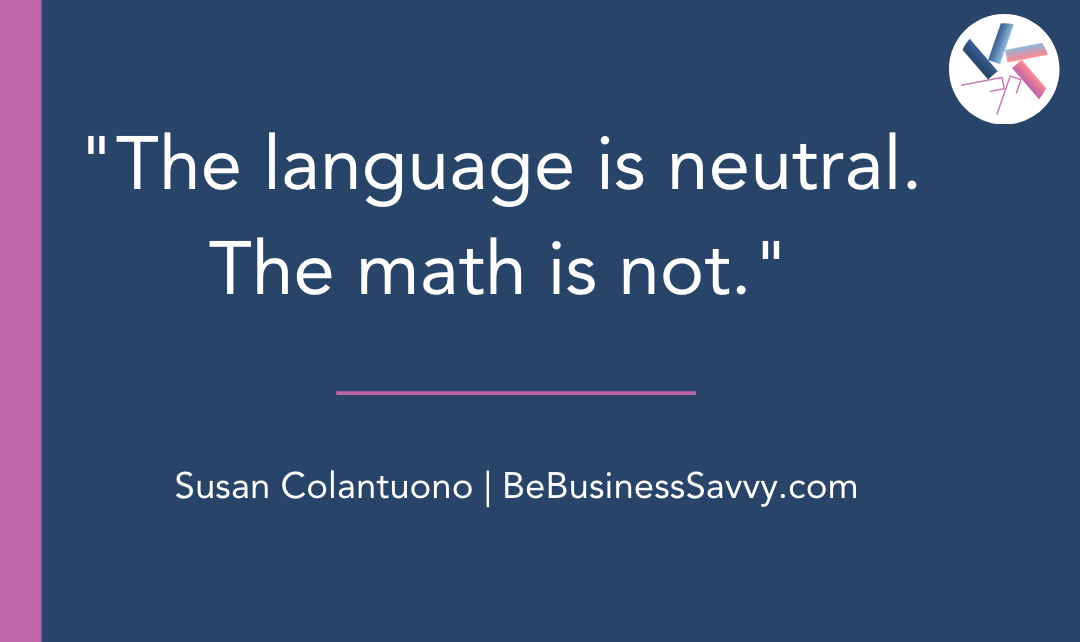
In an earlier article, I introduced the concept of gender-scrubbing: policies that have a gender-adverse impact on women written without naming women at all. The language is neutral. The facts and impacts are not.
A 401(k) match pause is gender-neutral on paper. When applied to a 66% female workforce in a below-median-wage sector, when women already retire with at least 39% less than men and while redirecting those savings toward technology that disproportionately threatens women’s jobs, it is not gender-neutral in effect.
As Jack Tuckner wrote on LinkedIn, “Companies believe neutral language is a litigation shield. It isn’t.”
This is gender-scrubbing at scale. And it will keep happening, quietly, under the label of workforce transformation, at company after company, until someone starts naming it.
What to Watch For
You may not work for TTEC. But your company is making calculations right now about where to find financial flexibility in an AI-first world. A Business Savvy reading of benefits announcements means asking:
Who makes up the majority of the affected workforce? A “gender-neutral” cut in a female-majority role is not gender-neutral in effect.
What’s the stated reason for the cut? “Investing in the future” and “workforce transformation” are phrases worth interrogating. Whose future? Which workforce?
What’s being traded for what? Retirement security for AI certifications. Parental leave for operational flexibility. Map the trade explicitly.
Who actually benefits from the investment being funded by the cut? If the AI upskilling pipeline doesn’t reach the workers who lost the benefit, the trade is not what it was presented as.
Is this a one-time adjustment or a new floor? “We plan to reassess next year” has a way of becoming the new normal.
Business Savvy isn’t just knowing how your company makes money. It’s knowing how your company makes decisions, and developing the analytical eye to see what those decisions don’t say.
Lead ON!
Susan