
They Erased the Word "Women." That Was the Point.
I couldn't wait to tell you what happened when I wrote about it

Something unexpected happened over the past couple of days.
I posted a LinkedIn Note about Zoom and Deloitte cutting parental leave and other benefits. Nothing unusual about changing benefits - except I introduced a new term to describe how both companies framed the impact of their cuts.
Gender-scrubbing: Using neutral language to hide a gender-adverse impact -- and escape accountability for the harm being caused.
A note before we go further: FMLA guarantees unpaid leave. What Zoom and Deloitte cut was paid leave. That distinction is not minor.
The response stopped me cold. 169,637 impressions. 102,752 members reached. 1060 reactions and over 303 comments from HR professionals, global payroll directors, consultants, and women (and men) in the thick of it.
Karla L. Miller (former work advice columnist for the Washington Post) quoted my words and credited the term by name. Many others affirmed its usefulness and/or accuracy.
Among the comments that most hit home was this from Michael McAteer who wrote:
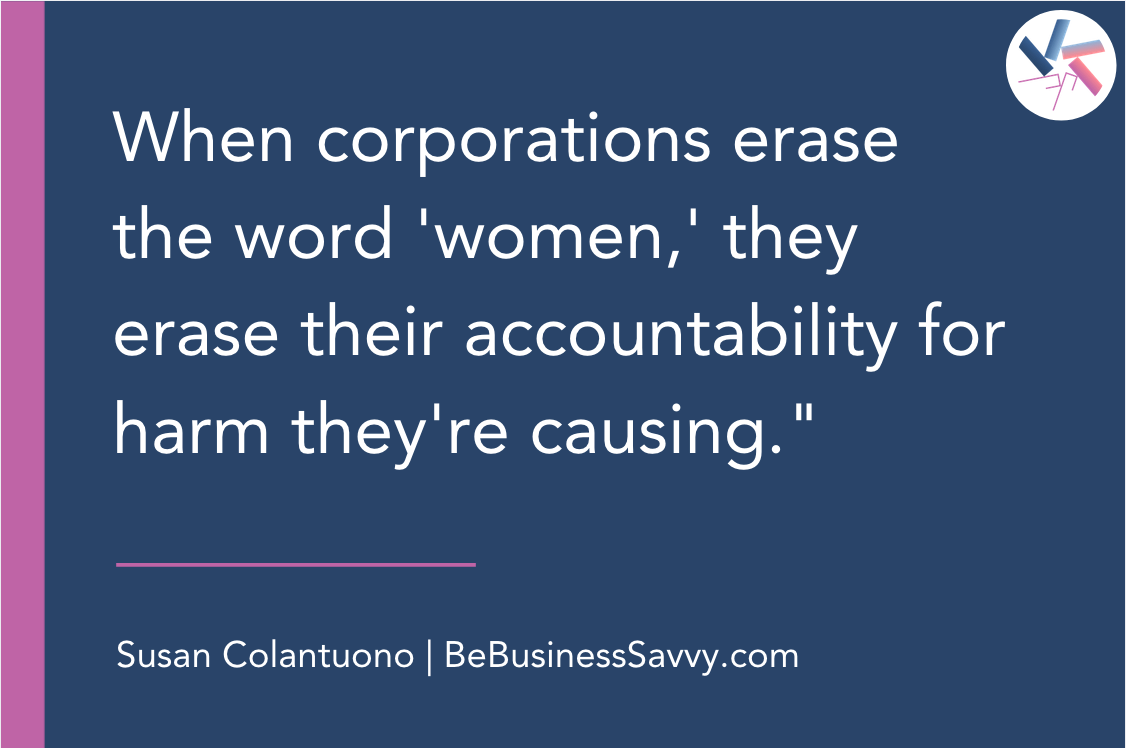
“…when corporations erase the word “women” from the conversation, they erase their accountability for the disproportionate harm they’re causing.”
and this from Jasmine Lyn, CEM, PMP:
“Tell me you value the women in your workplace less than the men, without telling me that you value them less.”
That’s not sloppy language. That’s strategy.
And it’s working. Because here we are re-litigating battles we already won.
What gender-scrubbing looks like in practice
Zoom reduced paid parental leave for birthing parents from 22-24 weeks to 18, and for non-birthing parents from 16 weeks to 10. Deloitte is cutting parental leave, PTO, pension contributions, and IVF funding for workers in support roles (HR, Marketing, IT and finance). Many of these roles are considered “pink collar” jobs.
Both companies describe the impact as falling on “caregivers.”
But research consistently shows the overwhelming majority of workplace caregivers are women.
Scrub the word “women” from the impact statement and the optics change entirely.
The harm doesn’t.
What’s more alarming than Zoom and Deloitte acting alone is the precedent they’re setting. When marquee employers move, others follow. We’ve seen it with DEI rollbacks. We’ve seen it with RTO mandates. A former Google HR head said it plainly: actions like these legitimize the action for everybody else.
What we can do together
Before we get to individual actions, here’s an important response that can be done collectively (e.g. through ERGs, peer networks and trusted allies). We can raise our voices to push for transparent impact analysis when a policy change arrives wrapped in neutral language:
Who is actually affected?
By how much? Disaggregated by gender, by role, by race, by caregiving status.
Demand that the word “women” stays in the conversation.
Because the moment it disappears, so does the accountability.
Gender-scrubbing is the problem. Demanding accountability is our collective protection. Business savvy is our personal protection.
What’s a Woman to Do?
When corporations escape accountability through gender-scrubbing, the women with the greatest protection are those who have protected themselves in advance. Here’s what that looks like in practice.
Do your own math. When a policy change uses neutral language, run the numbers yourself. Who is actually in those support roles? Who takes parental leave? Who holds the caregiving load? Name it to yourself even when you can’t name it publicly. Clarity is the first form of protection.
Build positional leverage before you need it. This is the heart of Business Savvy. Women with indispensable business value — who understand the financials, who drive results, who are seen as strategically essential — are harder to push out. Gender-scrubbing targets the expendable. Business savvy is what makes you the opposite.
Know your market value externally, always. Not just when you’re job hunting. Women who are hardest to push out are the ones who know exactly what they’re worth outside the building. Options are protection. Cultivate them continuously.
You’re already doing the harder thing - building the Business Savvy that makes you harder to push out, harder to erase, harder to hold back.
That’s what Be Business Savvy is for. Most Tuesdays and Fridays.
Lead ON!
Susan
Speaking of corporate shenanigans, I recommend this related post about how the continuum of misogyny shows up in our work lives. It explains how dangerous beliefs about women show up and what we can do about it.
