
Contact vs. Connection: Why Compliance Isn’t Enough
Yes, we are talking about Engaging the Greatness in Others

In dressage, there’s a critical distinction that separates adequate riding from the kind that looks effortless. It’s the difference between contact and connection.
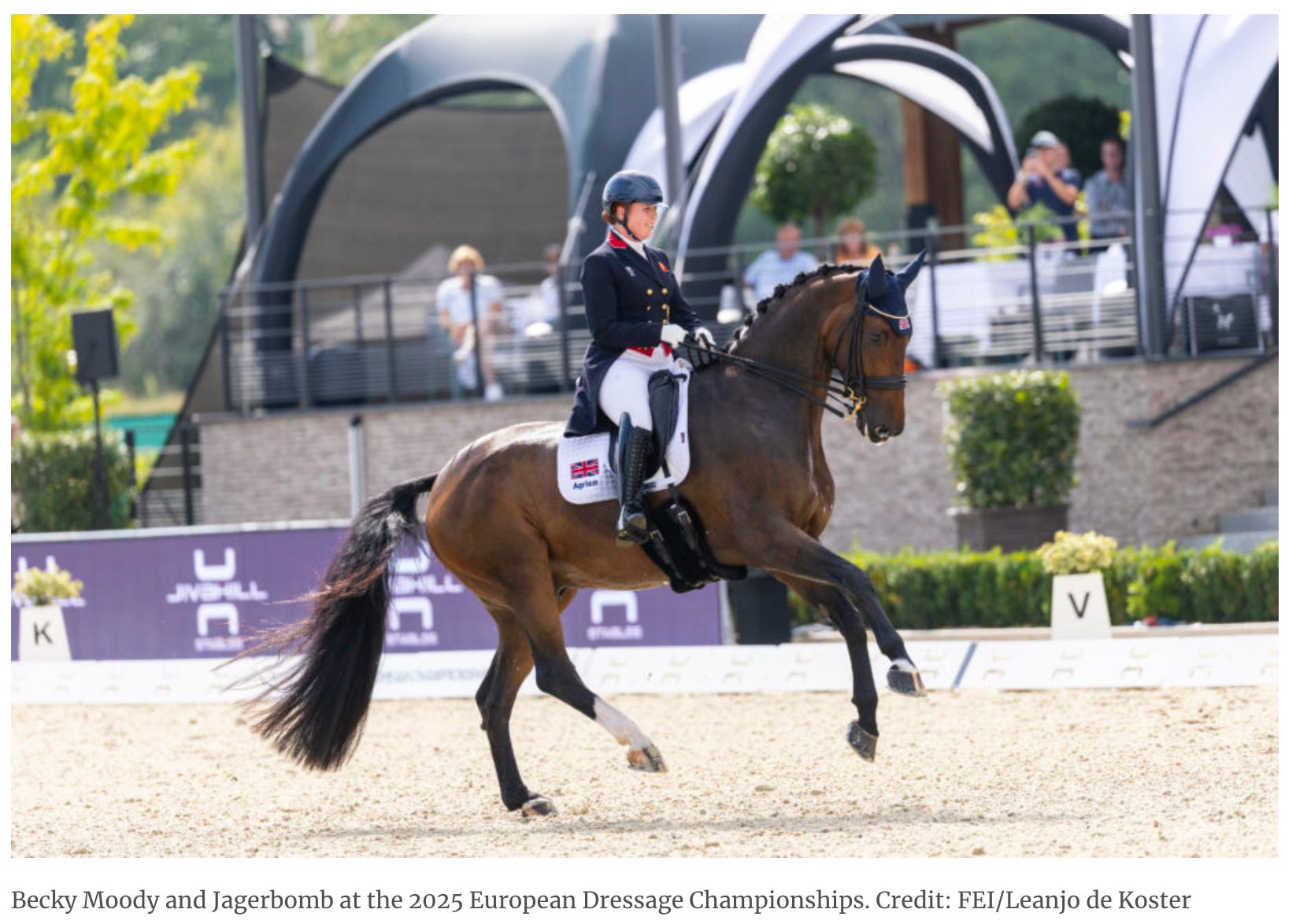
Contact is the relationship between your hand and the horse’s mouth—fingers to bit. It’s light, steady, just enough weight to communicate. It gives you a line of communication and lets you guide the horse where you want to go.
Connection is different. It’s not just about the mouth—it’s about the whole body. When you have connection, the horse is round through the topline, swinging in the back, stepping forward with engaged hindquarters into your hands. The energy flows from within—from the horse’s core and powerhouse, up through the back, into the neck, and softly into your hand. You’re not just steering. You and the horse are moving as one.
The difference between contact and connection in riding is exactly the difference between compliance and engagement in leadership. And many leaders stop at contact.
What Contact Gets You
Contact is necessary. Without it, you can’t communicate. Slack reins mean the horse has no idea what you want. In leadership terms, that’s the absent manager who gives no direction and wonders why nothing gets done.
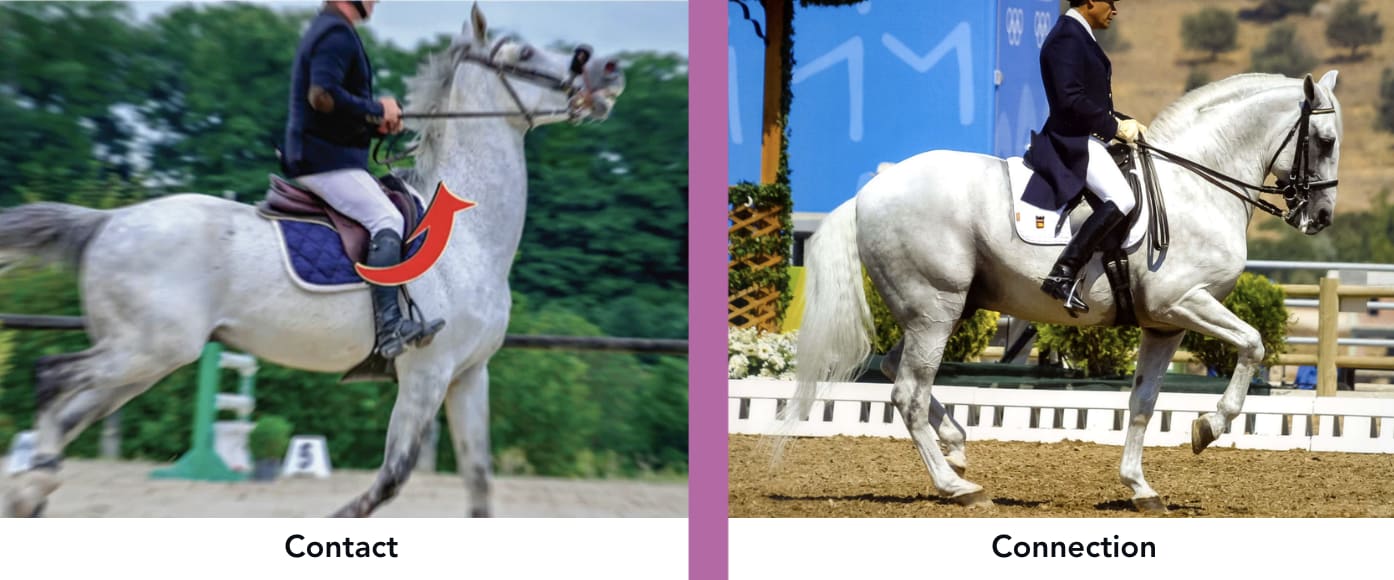
But too much contact is just as problematic. Heavy hands that pull and force create tension and resistance (below image on the left). The horse goes where you point, but it’s braced against you the whole way. In leadership, that’s micromanagement—constant oversight, detailed instructions, checking every deliverable. You get results, but you’re working too hard and your people are working mechanically…and resentfully.
Good contact—light, steady, just enough—is better. The horse responds to your aids. You can steer him around the arena. In leadership, this looks like clear expectations, appropriate oversight, consistent follow-up. People do what you tell them to do. Projects get completed. Numbers get hit.
That’s compliance. And compliance is not nothing. Sometimes it’s exactly what you need.
When Bill Cioffi, Surgeon-in-Chief and Jane Metzger, Chief Nursing Officer were managing the emergency department the night of the horrific Station nightclub fire—100 burn victims arriving simultaneously, 97 people dead—they weren’t building engagement. Bill was saying, “Everybody listen up. I want a nurse, respiratory therapist, and a doc at every stretcher. You will take direction from two people: Jane and me.” Jane was directing the patient flow: “Dawn, I want you down here. Tell Karen to move the 33 patients off the surgical side to make beds ICU-capable.”
Pure command and control. Absolute contact, zero connection. And completely appropriate for the situation—high stakes, no time, lives on the line.
But if command & control is your default leadership approach, if you’re managing by contact all the time, you’re only getting effort, but you’re not getting hearts and minds. People comply, but they don’t commit.
The Problem with Only Contact
I worked with a director who had excellent contact with her team. She was clear about expectations. She followed up consistently. She gave good feedback. Her people knew exactly what was expected and they delivered it.
But when I asked them about their work, they described doing what she asked because she asked. If she didn’t specify something, they didn’t do it. If she was out of the office, productivity dropped. When she delegated a project, she would check in constantly.
She had contact. She could steer. But she didn’t have connection. The energy wasn’t coming from within—from their internal motivation and commitment. It was all coming from her. As a result, she was working much harder than she needed to because she was pulling the whole operation forward instead of channeling energy that was already there.
That’s what happens. When you stop at compliance, you get mechanical effort, not engagement. People show up and do the job, but they don’t bring their creativity, their initiative, their greatness. They wait to be told what to do instead of seeing what needs doing and stepping up to handle it.
What Connection Actually Means
In dressage, connection means the energy comes from within. Your leg activates the horse’s core and hindquarters - its powerhouse. That energy flows forward through its body - lifting the back, rounding the neck, arriving softly at the bit. Your hand doesn’t create the energy. It receives and shapes it. (above image on the right)
When you have connection, you can feel it. The horse is truly with you. Transitions are smooth. The horse stays balanced and round even when you lighten your contact. You’re not fighting to hold it together. It'’s carrying itself, and you’re just guiding where that energy goes.
In leadership, connection looks like what Nobel Prize winner Wangari Maathai created with the women of the Green Belt Movement. She described these women as “persuaded to believe that because they were poor, they lacked not only capital, but also knowledge and skills to address their challenges.” Through her leadership, they planted 35 million trees, stood up to a dictator, and eventually helped usher in democracy.
She didn’t do that through command and control. She did it by engaging the greatness of the women - by helping them recognize their hidden potential, by empowering them to overcome inertia and take action, by connecting them to something larger than themselves. The energy came from within them. She just shaped where it went.
That’s connection. Hearts, minds, and efforts all engaged in service of something they care about.
How You Build Connection
In riding, you build connection by activating the horse’s core and powerhouse. You don’t pull the horse into a frame with your hands. You use your seat and leg to engage the hindquarters, create energy from within, and channel it forward into your hands. The power comes from the horse’s own body - you just shape where it goes.
The same principle applies in leadership. You don’t force engagement by tightening control. You create conditions where people’s internal motivation can flow toward organizational outcomes.
Anne Mulcahy did this as CEO at Xerox during its massive turnaround. She and the executive team could have just issued directives: do this, cut that, comply or else. Instead, they engaged people: “Here’s the problem. Here’s the strategy. Here’s what you can do to help. You have a choice—you can leave and we’ll help you do that, or you can roll up your sleeves and help.” (Notice that Anne was explicit about the strategy - something larger than themselves.)
That message engaged hearts, minds, and efforts. People who stayed weren’t just complying with orders. They were choosing to commit their energy to solving the problem. As Anne described, “Defections slowed to a trickle, energy returned, and our people turned around the company.”
She activated the core - internal motivation, personal choice, ownership of the problem, commitment to the strategy. That energy flowed forward into the specific work that needed doing. She shaped where it went, but she didn’t have to create it.
When Everything Changes
When you have both clear communication and genuine engagement, everything shifts.
Change management becomes smoother because people aren’t just complying with new directions, they’re committed to making the change work. Teams stay resilient under pressure because the energy is coming from within them, not just from you pushing them forward. You can lead more from vision and purpose than from constant direction and oversight.
You feel it, just like a rider feels it when a horse truly connects. Things get lighter. People are more responsive. You’re not working so hard because you’re channeling energy rather than creating it.
That’s when leadership starts to feel less like effort and more like partnership. That’s the magic Meg Whitman was describing when she said one plus one equals four if you have the right people in the room. That’s what it looks like when you’re not just managing effort but capturing hearts and minds.
Why This Makes Your Work Life Easier
Here’s the insight that matters:
Engagement skills create the energy. Business Savvy provides the alignment—the strategic direction that energy needs to flow toward.
Without Business Savvy, you might build great connection with your team. People are engaged, committed, bringing their full selves to work. But if they don’t understand the business strategy, the financial constraints, or what actually drives value for the organization, all that energy scatters. You end up with happy sailors on a sinking ship.
Without engagement, you might have brilliant strategic clarity. You understand exactly what the organization needs to accomplish. But if people are only complying, you’re pulling everything forward yourself. You’re working too hard because you’re the only source of energy.
When you have both—genuine connection AND strategic alignment—work gets easier. The energy is there, it’s flowing in the right direction, and you’re guiding it rather than generating it. That’s when you can lead more from your seat than your hands. That’s when one plus one equals four.
This series focuses on engagement because that’s where women already have strength to build on. But don’t mistake refining this skill for the whole equation. Engagement channeled toward the wrong outcomes, or engagement without strategic direction, won’t advance your career or your organization. The goal is always outcomes. Engagement is how we achieve them through others.
Contact is necessary. You can’t have connection without it - you need that line of communication, those clear expectations, that steady guidance. But if you stop at contact, if all you ever build is compliance, you’ll spend your entire career working too hard. You’ll be pulling everything forward with your hands instead of channeling energy that’s already there.
Connection is what separates adequate leadership from the kind that changes organizations. It’s the difference between controlling effort and capturing hearts, minds, and efforts. It’s what makes the work feel less like force and more like partnership. And once you feel it—once you experience what it’s like to lead a truly engaged team that brings their greatness forward even when you lighten your hands—you won’t want to go back to just contact.
In this series I’m using the principles of dressage to illustrate an essential truth: The purpose of engaging others is to advance the organization. As much as our engagement skills reward us, feeling good about team cohesion or our communication effectiveness is not the point. It’s the process.
Coming next: Once you understand contact vs. connection, the next question is: how do you actually build it? We'll explore The Control Paradox: Why Holding Tight Makes You Lose Your Grip.
ICYMI, the series started here:

Engagement skills matter because they’re the process for achieving outcomes, not the point in themselves. Here’s how to practice this principle this week:
